For kia genuine parts vs aftermarket longevity, long-term reliability is not decided by the lowest quote on the screen. It is decided later, when the vehicle starts cold, handles heat, keeps fuel pressure steady, and does not come back on a tow truck.
Reliability Starts After the First Installation
Comeback Cost
A part can look fine on the counter and still be a poor long-term buy. The real test comes after heat, vibration, fuel exposure, dirty connectors, and repeated starts. For a fuel pump, that test is unforgiving. If the pump cannot deliver stable fuel under load, the driver does not complain about supplier categories. The driver says the car hesitates, stalls, or refuses to start.
This is why workshops and importers often judge reliability by comeback risk, not only by purchase price. One cheap part can create second labor, towing, customer calls, and warranty argument. A small saving on the invoice can disappear before the first replacement box is opened.
Older Vehicle Pressure
A fuel pump installed in a clean test setup is one thing. A pump working in an older vehicle with sediment, low fuel level habits, and tired electrical grounds is another. That is why kia genuine parts vs aftermarket longevity deserves a stricter answer for fuel-system parts than for simple cosmetic items.
Fuel pumps also fail in ways that are easy to argue about. One shop says the pump was weak. Another says the tank was dirty. A driver says the car only hesitates with the air conditioner on. This is why clean fitment records and installation notes matter. They give the buyer and supplier something better than memory when a claim appears three weeks later.
Kia Genuine Parts vs Aftermarket Longevity for Fuel Pumps
Pressure and Flow Stability
A fuel pump is not just a motor inside a housing. It has to send the right fuel volume at the right pressure while handling tank heat, vibration, fuel quality, and electrical load. A weak pump may pass a quick start and fail during acceleration, hot soak, or low-fuel operation. That is the kind of failure customers remember.
Genuine or OE-standard supply often gives buyers a clearer route for fitment, pump behavior, connector design, and repeat consistency. The point is not that every aftermarket pump is bad. The point is that the aftermarket seller has to prove enough before a buyer can treat it as a long-term reliability choice.
Supplier Proof
A serious aftermarket supplier should confirm the OE number, pump assembly structure, tube layout, connector view, target application, packing, and return handling. Ask whether the current batch is the same specification as the sample. Ask how complaints are traced. If those questions feel annoying before purchase, imagine them after a failed pump has already crossed a border.
For kia genuine parts vs aftermarket longevity, supplier behavior is part of the product. A clear answer, current photos, and repeatable stock matter almost as much as the first sample.
For bulk buyers, a good habit is to separate sample approval from full-carton approval. A sample can confirm the shape, connector, and first installation. A repeat carton checks whether the supplier can keep the same quality when the order becomes normal business. That second step is where many cheap offers start to show their real cost.
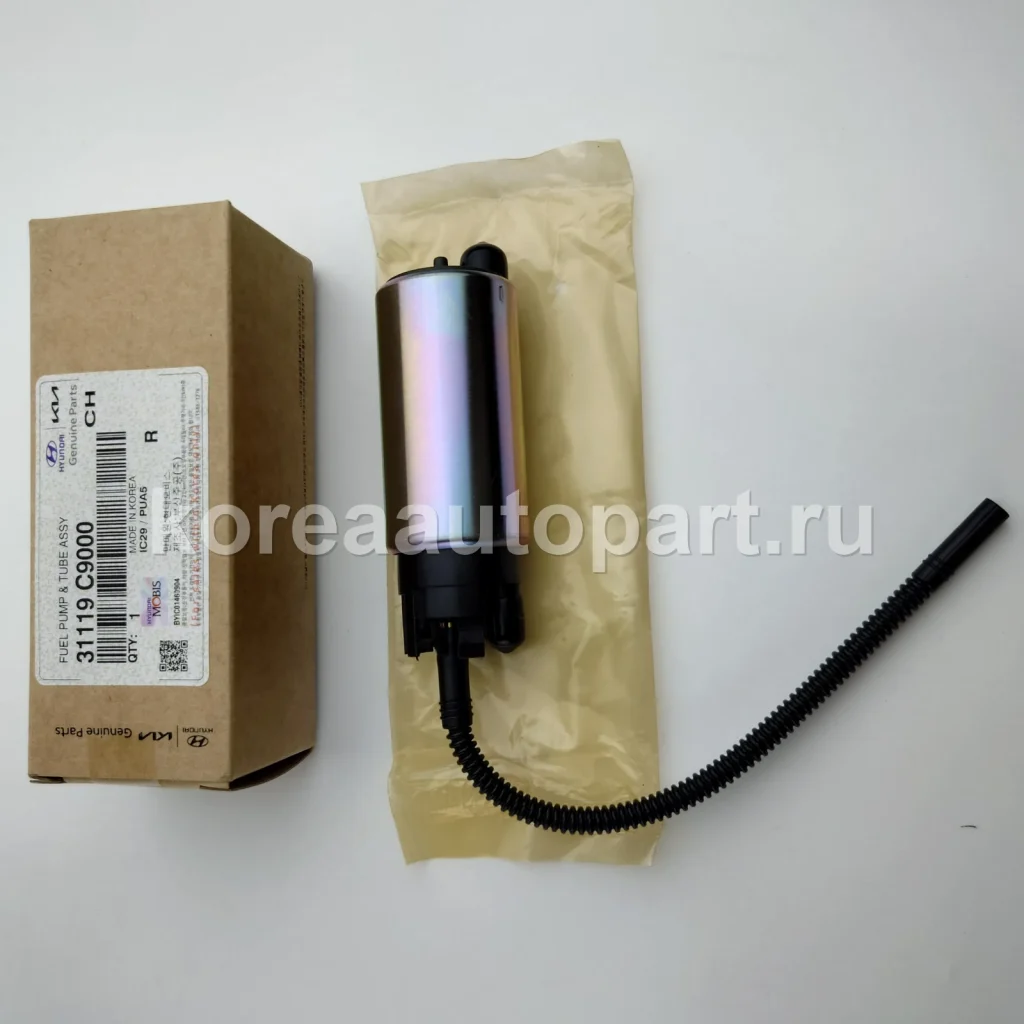
Product Focus: 31119-C9000 Fuel Pump and Tube Assy
Number-Based Matching
The 31119-C9000 FUEL PUMP & TUBE ASSY should be treated as a number-based product request. Do not buy by pump shape alone. Fuel pump and tube assemblies can differ in tube routing, connector style, tank fit, and application even when the general photo looks close.
Before quoting, confirm the removed part number, vehicle model, engine, production year, and market. If a VIN is available, use it. If not, ask for photos of the old assembly from more than one angle. A single top-view photo often hides the detail that decides fitment.
Product Data for Buyers
When Aftermarket Can Still Be the Better Buy
Price-Sensitive Vehicles
A checked aftermarket fuel pump can make sense for an older vehicle when the customer wants a cost-controlled repair and the supplier has proven the part across repeat orders. In many markets, that is how older Kia vehicles stay in service. A good aftermarket line is not a shortcut; it is a controlled value choice.
Keep the language honest with your customer. If the vehicle is old, the budget is tight, and the buyer accepts the tradeoff, aftermarket can be practical. If the vehicle works every day for income, the lowest price may be the wrong kind of saving.
High-Risk Repairs
Use genuine or OE-standard supply for vehicles that cannot tolerate downtime, for workshop warranty jobs, or for buyers who already had one failed repair attempt. Fuel pumps are unpleasant comeback parts because the vehicle may not fail politely in the bay. It may fail at a fuel station, in traffic, or in a customer’s driveway.
Buying Checks Before a Bulk Order
Fitment Package
Ask for a fitment package before bulk approval: OE number, old assembly photo, connector photo, tank-side view, model year, engine, and market. For mixed wholesale customers, include a short note explaining which vehicles the part is meant for and which vehicles still need confirmation.
Packing and Claims
Fuel pump assemblies need packing that protects tubes, plastic housings, and terminals. A bent tube can turn a good product into a return. Also agree on the claim process before shipment. Photos, batch labels, and installation notes help both sides decide whether a problem is fitment, transport damage, installation, or product failure.
Ask Korea Auto Parts Before Reliability Becomes a Return
Clear Buying Judgment
The best choice is not always the genuine part and not always the aftermarket part. For kia genuine parts vs aftermarket longevity, choose the supply route that matches the repair risk. Fuel-system parts deserve stricter checks because they can stop the vehicle, not just annoy the driver.
Service and Contact
Korea Auto Parts can help you review fitment, packing, repeat supply, and service options for 31119-C9000. Send the vehicle details, OE number and quantity through a pump order check before the lowest quote turns into the longest claim conversation.
FAQ
Are genuine Kia parts always longer lasting than aftermarket parts?
Not always. Genuine or OE-standard supply usually gives clearer fitment and responsibility. A well-checked aftermarket part can last well when the supplier proves number matching, batch consistency, and support.
Why does kia genuine parts vs aftermarket longevity matter for a fuel pump?
A fuel pump affects starting, driving under load, and fuel delivery. If it fails, the vehicle may stall or refuse to start, so the real cost can exceed the part price.
What should you confirm before ordering 31119-C9000?
Confirm the OE number, removed assembly, connector, vehicle model, engine, market, packing, and claim process. Korea Auto Parts can help review these details before shipment.